
Capybara 101
- Diet: Herbivorous, primarily grasses and aquatic plants
- Lifespan: 6–12 years in human care
- Social Structure: Live in family groups of 10–20 animals
- Notable Traits: Excellent swimmers, highly vocal, and emotionally intelligent
Capybara Behavior & Communication
Capybaras use a range of vocalizations and body language to express emotions, set boundaries, and maintain group order. These include barks, whistles, purrs, and alarm calls. They also engage in mutual grooming and physical closeness as a form of bonding.
- Chirps and Whistles: Often heard from young capybaras to maintain contact
- Teeth Chatter: A common sign of contentment
- Barking: Used as a warning signal to others
- Grooming: A behavior that builds trust and reinforces group cohesion
Capybaras in Human Care
When managed ethically, capybaras can thrive in sanctuary and educational settings. Positive human-animal interactions are built through trust, consistency, and attention to each animal’s preferences. Capybaras benefit greatly from enrichment, structured habitats, and the ability to choose whether to interact with guests.
- Capybaras need regular access to water and soft substrate to prevent foot injuries
- Social housing is essential, solo housing is strongly discouraged
- Human interaction should always be consent-based and monitored by trained handlers
Ethical Encounters & Responsible Education
Capybara Café is committed to upholding high standards in animal care and public education. All animal encounters are limited in group size and duration and are supervised by experienced staff. Participation is never forced, and every animal has space to retreat and rest.
Our goal is not entertainment—it is education. Through close observation, enrichment, and choice-based interactions, guests leave with a greater appreciation for wildlife and a better understanding of what ethical care really means.
Understanding Capybaras Through an Evidence-Based Lens
Capybara Café incorporates evidence-based practices grounded in ethological research, comparative psychology, and animal welfare science. This academic series highlights peer-reviewed findings that inform our care model, emphasizing species-specific enrichment, behavioral choice, and the role of structured human interaction in captive settings.
1. Capybaras Are Structurally Social Mammals
Hydrochoerus hydrochaeris (capybara) is a semi-aquatic, highly gregarious rodent with a well-documented proclivity for structured social systems. Research indicates they form multi-individual cohorts characterized by stable dominance hierarchies, allo-grooming behaviors, and synchronized group dynamics. These elements contribute to psychological well-being and facilitate socio-environmental adaptability in both wild and captive populations.
Capybaras exhibit a strong dependence on conspecific interaction to mitigate stress and establish environmental security (Ferraz et al., 2005; Herrera & Macdonald, 1987).
2. Enrichment as a Welfare Imperative
Cognitive and environmental enrichment are critical variables in maintaining behavioral homeostasis in capybaras under human care. Environmental complexity—via dynamic structures, hydrotherapy access, foraging-based puzzles, and sensory stimuli—has been correlated with reduced incidence of stereotypies and increased exploratory behavior (Young, 2003).
- Provision of water access is non-negotiable due to their thermoregulatory and ethological needs
- Cognitive puzzles reinforce natural foraging instincts and agency
- Structured retreat spaces mitigate overstimulation and enable autonomy
3. Human Interaction: Conditioning, Choice, and Stress Regulation
While capybaras are not domesticated, studies have demonstrated their capacity to form habituated and positive associations with humans, particularly when reinforced through operant conditioning, familiar scent profiles, and behavioral consistency. Ethological literature supports that choice-driven interactions reduce cortisol response and reinforce behavioral predictability in rodents.
When approached through a Least-Intrusive, Minimally Aversive (LIMA) framework, human-animal interaction can be not only tolerable but welfare-enhancing (Maple & Segura, 2015).
4. Translating Science into Practice: The Capybara Café Model
At Capybara Café, our animal management protocols integrate the most current data in ethology and applied animal behavior. Each interaction is voluntary, preceded by observational assessments, and continually informed by the individual’s engagement threshold and response latency.
- Daily records are maintained to track enrichment effectiveness and welfare indicators
- Encounters follow a low-density, low-duration model with opt-out capacity
- Staff undergo continual training in behavioral observation and reinforcement schedules
This science-driven approach ensures our animals receive a level of care that is replicable, measurable, and in alignment with international welfare benchmarks.
References
- Ferraz, K. M. P. M. B., et al. (2005). Group structure and spatial organization of capybaras (Hydrochoerus hydrochaeris) in southeastern Brazil. Revista Brasileira de Zoologia, 22(4), 964–971.
- Herrera, E. A., & Macdonald, D. W. (1987). Group stability and the structure of a capybara population. Symposia of the Zoological Society of London, 58, 115–130.
- Young, R. J. (2003). Environmental Enrichment for Captive Animals. Blackwell Publishing.
- Maple, T. L., & Segura, V. D. (2015). Advancing zoo animal welfare science and policy. Journal of Applied Animal Welfare Science, 18(sup1), S1–S3.
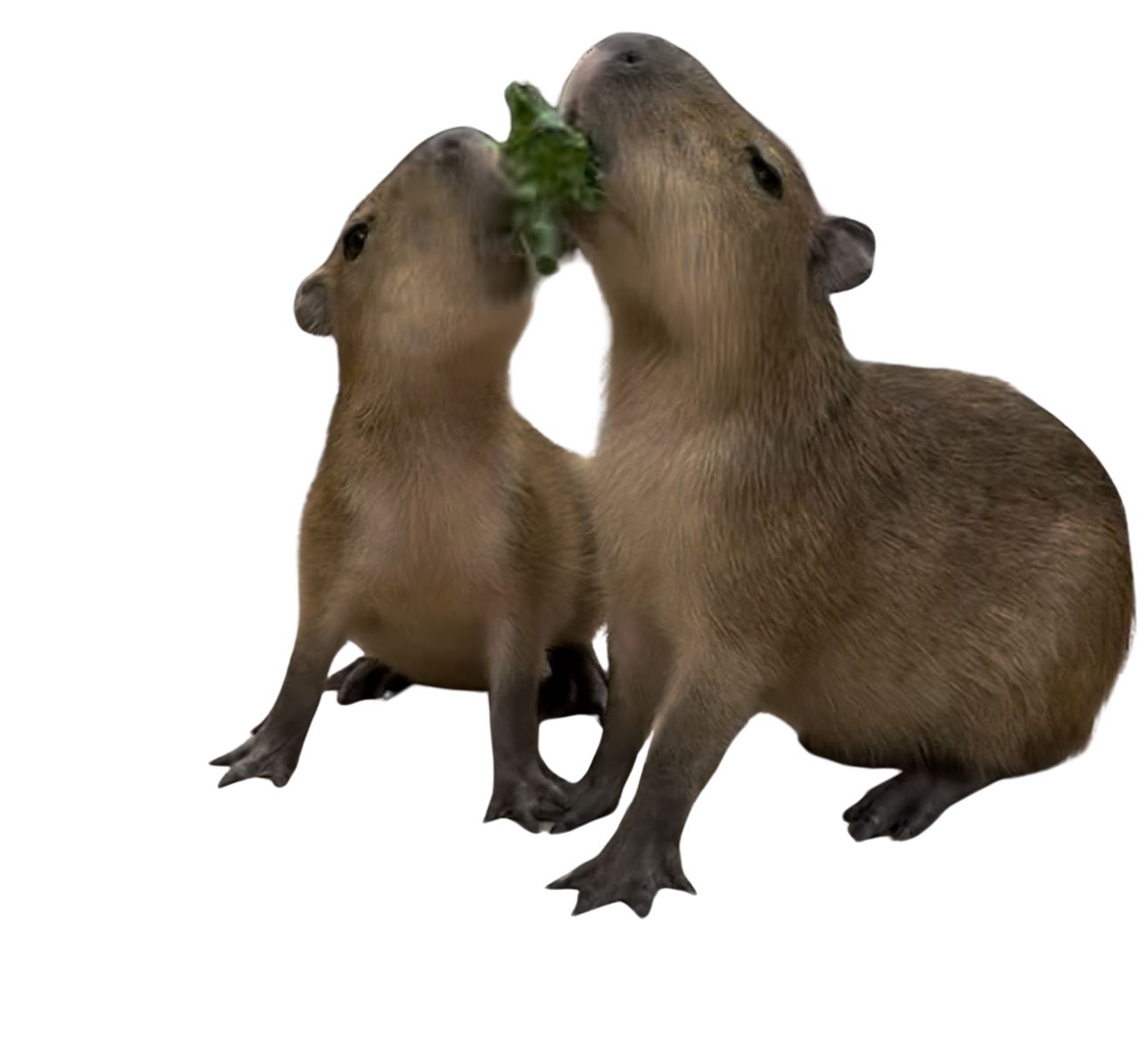

Capybaras (Hydrochoerus hydrochaeris) are native to South America and are the largest rodents on Earth. They are highly social, semi-aquatic mammals known for their calm demeanor and strong group dynamics. Capybaras typically live near rivers, lakes, or wetlands and depend on access to water for temperature regulation, safety, and grooming behaviors.